
那一场呼啸而过的青春
Biden Admin Officials Go on Defensive After Bezos Blasts Prez's Plea to Gas Companies_我的网站

一 | As the White House continues to shroud crippling fuel prices, inflation, and other worrying economic trends within a feel-good narrative with abstract explanations, it appears a growing number of Americans are growing tired of being told to make daily sacrifices.,© Twitter/@JeffBezosA screenshot (3/7/22 | 22:40 Eastern Time) shows Amazon founder Jeff Bezos' viral response to US President Joe Biden's call for gas companies to lower prices at the pump amid economic instability. A screenshot (3/7/22 | 22:40 Eastern Time) shows Amazon founder Jeff Bezos' viral response to US President Joe Biden's call for gas companies to lower prices at the pump amid economic instability. © Twitter/@JeffBezos,Nevertheless, White House and National Security Council (NSC) officials defended the president’s Saturday post, asserting that Bezos’ binary approach is not that of the Biden administration.,“Anybody that knows President Biden knows he’s plain-spoken and he tells exactly what he’s thinking in terms that everybody can understand,” NSC coordinator for strategic communications John Kirby told “Fox News Sunday” guest host Mike Emanuel.,“So, I think, we obviously take great exception of the idea that this is somehow misdirection,” Kirby added.,Jeff Bezos Claims Biden ‘Misunderstands’ Market Dynamics With Gas Price Reduction CallYesterday, 17:58 GMT,While Kirby tackled the cable television front, White House Press Secretary Karine Jean-Pierre directly addressed Bezos and quipped that it was unsurprising that a man of Bezos’ wealth and workplace reputation would speak out in favor of gas companies being able to “reap record profit.”,“Oil prices have dropped by about $15 over the past month, but prices at the pump have barely come down,” the press secretary tweeted. “That’s not “basic market dynamics.” It’s a market that is failing the American consumer.”,Diplomatic actions taken over the past several months have had a lasting impact on several economies across the world.,“It’s time for the United States to continue to support Ukraine, and that’s what we are doing,” Kirby said on Sunday, dismissing the idea that the US may play a role in urging Kiev to draft a settlement agreement with Moscow.,The NSC official emphasized that the US intends to continue arming Ukraine to ensure its forces “can succeed on the battlefield so that [Ukrainian President Volodymyr Zelensky] can succeed at the table.”。
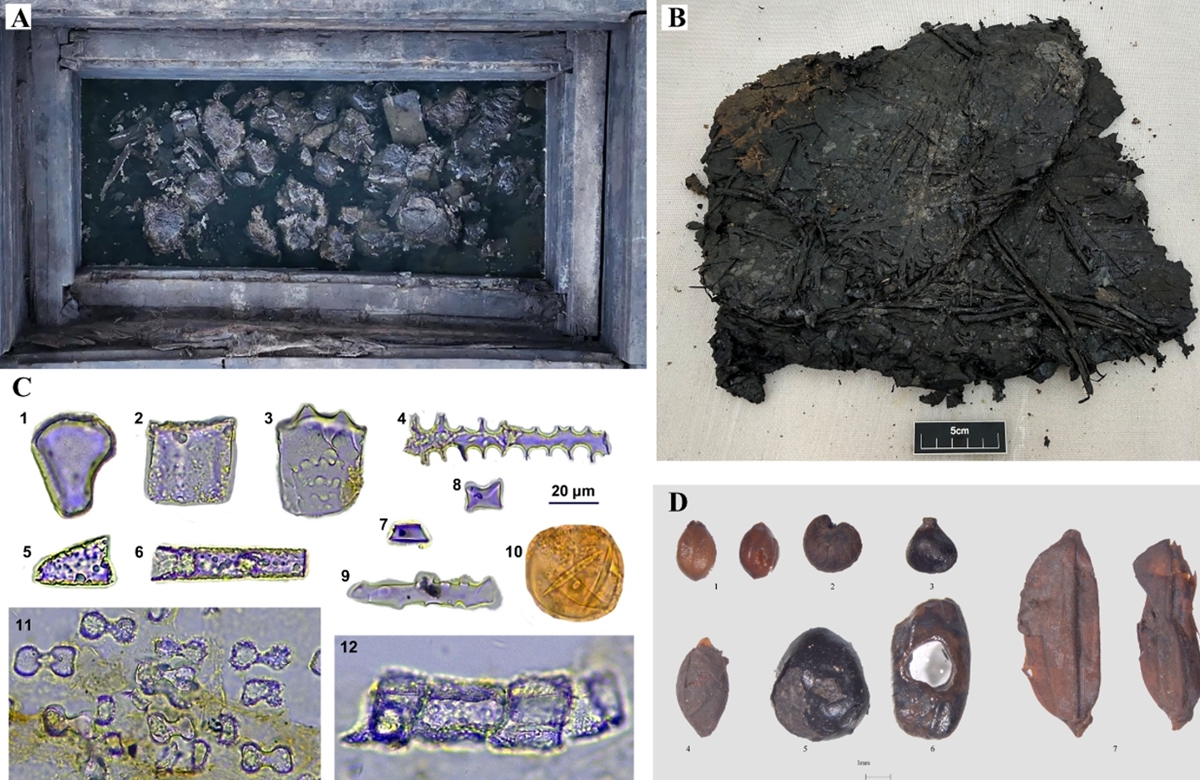
In March 2024, archaeologists from the National Center for Archaeology excavated a large number of well-preserved, waterlogged plant bundles from the tomb's outer coffin chamber. On-site, the plant bundles could be seen tightly wrapped in broad leaves and tied with plant-fiber cords.
A team of researchers led by the National Center for Archaeology, IVPP, and the Chinese Academy of Social Sciences examined 12 of the bundles and found that the wrapping leaves came from oak trees, while the cords were made from grasses.
The bundles mainly contained rice, broomcorn millet, foxtail millet, and cereal seeds, most of which were still in their husks and mixed with inflorescence material. Small amounts of peppercorn, mallow and rice-field weed seeds were also found.
The fact that the bundles were found in a tomb and mainly contained grains still in their husks suggests they were not everyday food, but offerings intended for funerary rituals. "This might reflect a Warring States-era belief that grains served as wealth for the dead in the underworld," Ge Yong, an associate researcher at the IVPP and the study's corresponding author, told the Global Times.
A Qin Dynasty (221BC-206BC) text describes a belief that "soybeans were gold and millet was money" for the dead, indicating that grains held symbolic significance in funerary culture. "The bundles therefore appear to have been ritual offerings prepared for the deceased," Ge said, "not food for the living."
The physical structure of the bundles also resembles that of zongzi, with grains wrapped in leaves and tightly secured with plant-fiber cords. "Similar practices of wrapping grains for burial have also been found elsewhere within the Chu cultural sphere," Ge said, "such as at the Chengyangcheng Site."
At the Chengyangcheng archaeological site in Henan Province, rice and broomcorn millet were also discovered wrapped in oak leaves. "An interesting fact is that we can still find zongzi wrapped with the same oak leaves now in regions related to the Chu cultural sphere."
"The findings suggest that wrapping grains as funerary offerings was a relatively common practice in the Chu state during the Warring States period," Ge said. "And this practice may have been an early form of the zongzi later associated with the legend of Qu Yuan."
These plant bundles share a structure similar to that of modern zongzi and to those described in legends and folklore. This might reflect how, through cultural exchange and heritage, these 2,200-year-old plant bundles likely evolved over centuries, shifting from sacrificial offerings to food, said Ge.
As diverse regional populations adapted the practice, it eventually transformed into the well-known Dragon Boat Festival tradition of eating zongzi. Thus, this structural resemblance might suggest a potential historical lineage; however, experts stressed that the Wuwangdun bundles should not simply be labelled as ancient zongzi.
"We can't define these plant bundles as the earliest zongzi, but rather, we can confirm that by 2,200 years ago at the latest, the Chu region had established a tradition of using this specific form of plant bundles for funeral rites. And this tradition could be a possible origin or precursor of the well-known zongzi," said Ge.
He added that the discovery provides critical physical evidence to explore the origins of zongzi and its cultural heritage.
。
Current article:http://9m7jmwv.feizengbubaipeirangnalouchuo.sbs/qn2gmz/cbu4wzm.html
Published on:19:30:05